How to Treat Mine Drainage at Active Sites
Learn how to treat mine drainage with testing, source control, chemical treatment, solids separation, and reliable discharge management plans on site.
Learn how to treat mine drainage with testing, source control, chemical treatment, solids separation, and reliable discharge management plans on site.
Can polymer treatment reduce turbidity? Learn how proper polymer selection, dosage, mixing, and solids capture improve clarity and control disposal costs.
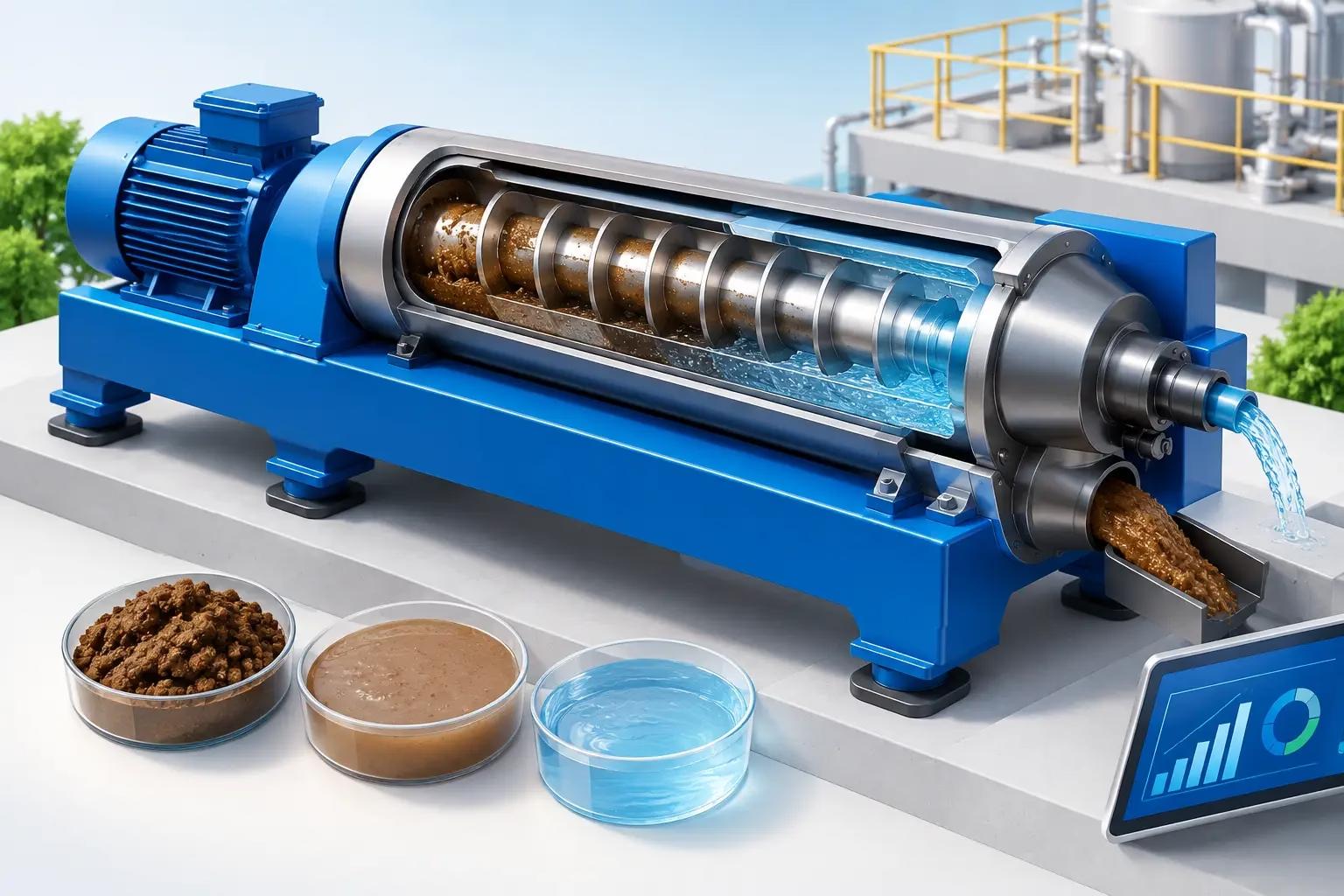
Learn how dewatering centrifuges separate slurries, where they fit, and which feed, polymer, and operating factors control cake dryness and total cost.
Why flocculants underperform can stem from chemistry, mixing, feed changes, and equipment limits. Find the cause to improve drier cake and solids capture.
Use this centrifuge preventive maintenance planning guide to reduce unplanned downtime, protect separation performance, and schedule service confidently.
A decanter centrifuge performance review should measure cake solids, centrate quality, throughput, energy use, polymer demand, wear, and disposal savings.
Dewatering automation improves polymer dosing, throughput, cake consistency, and compliance when controls are matched to sludge behavior and equipment.
Learn what causes centrifuge vibration, how to separate process instability from mechanical faults, and when to stop, inspect, and correct the system.
Learn how to dewater drilling cuttings with testing, polymers, centrifuges, and geotextile containment to reduce disposal volume and keep sites clean.
Polymer make down systems prepare consistent solution strength for better flocculation, cleaner filtrate, and reduced disposal costs for better dewatering.