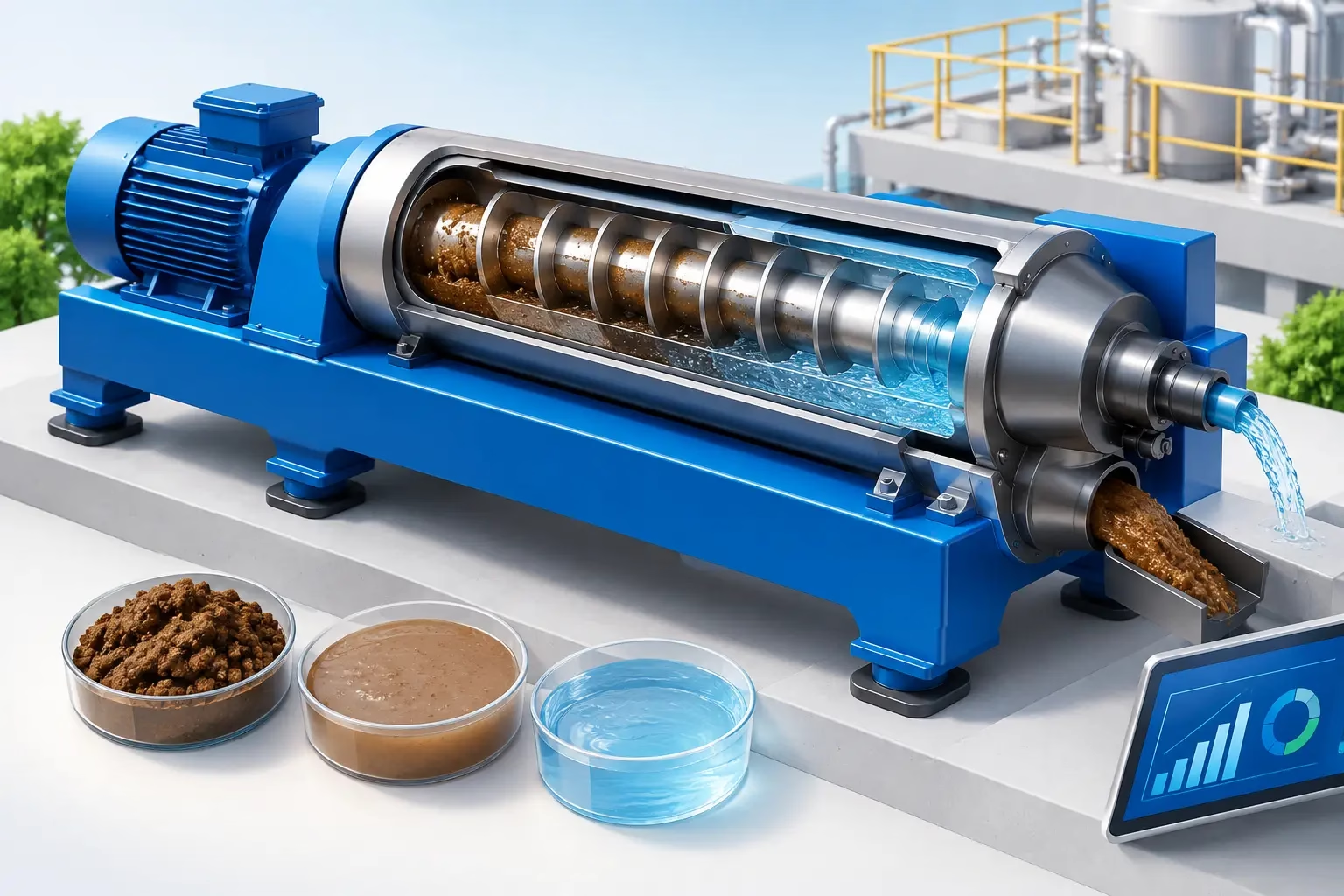
A decanter centrifuge can appear to be performing well while quietly increasing disposal cost, polymer consumption, and operator attention. A useful decanter centrifuge performance review looks past whether the bowl is turning and asks a harder question: is the machine producing the required solids capture and cake dryness at the lowest practical operating cost for this feed stream?
That question matters in municipal sludge handling, industrial wastewater treatment, dredging, drilling-fluid recovery, mining, and remediation work. Feed characteristics change. Polymer response changes. Wear progresses. A configuration that ran efficiently on one sludge can become a bottleneck when solids loading, viscosity, particle size, or biological conditions shift.
What Decanter Centrifuge Performance Should Mean
Performance is not a single number. Throughput is important, but running more gallons per minute does not help if centrate quality declines or the discharged cake becomes too wet for economical hauling. Likewise, a very dry cake is not automatically a win if achieving it requires excessive polymer, high torque, reduced feed rate, or frequent shutdowns.
A practical review balances five operating results: dry solids throughput, cake solids content, centrate clarity or suspended-solids capture, chemical consumption, and total operating cost. The right balance depends on the project. A wastewater facility facing rising landfill fees may prioritize cake dryness. A dredging contractor working within a constrained containment area may place more value on clean centrate and dependable high-volume processing. A drilling-fluid operation may focus on recovering reusable fluid while controlling abrasive wear.
The review should also account for reliability. A decanter that produces acceptable results for several hours but requires constant torque corrections, frequent flushes, or unplanned maintenance is not delivering stable process performance.
Start With a Representative Feed Evaluation
The most common source of misleading centrifuge data is an unrepresentative sample. One grab sample from a tank, lagoon, or dredge discharge rarely describes the full material stream. Solids concentration, particle-size distribution, oil and grease, pH, temperature, and shear sensitivity can vary substantially across a shift or project phase.
Begin by documenting feed total solids, volatile and fixed solids where applicable, density, conductivity, pH, particle size, and any known contaminants. For municipal biosolids, record changes in upstream digestion, thickening, industrial contributions, and seasonal loading. For dredged sediment, identify the percentage of sand, silt, clay, organic matter, and debris. For industrial sludge, understand whether the solids are mineral, biological, oily, fibrous, sticky, or chemically precipitated.
This information determines whether the centrifuge is correctly matched to the duty. It also establishes a baseline for interpreting performance changes. If cake solids fall by four points, the cause may be an equipment setting. It may just as easily be a lower feed concentration or a shift toward finer, more difficult solids.
Polymer Must Be Evaluated With the Machine
Polymer selection cannot be separated from centrifuge performance. The correct product and dose help form flocs that release water, settle effectively under centrifugal force, and survive the shear created by pumps, piping, feed zones, and the rotating bowl.
A polymer program should be reviewed for active dose, make-down concentration, aging time, dilution water quality, injection location, and mixing energy. Overdosing may create a clear centrate but can increase cost, create sticky cake, or reduce conveyor performance. Underdosing commonly shows up as cloudy centrate, reduced capture, and elevated solids loading downstream.
Jar testing can narrow the options, but it does not replace a controlled machine trial. The centrifuge introduces shear and residence-time conditions that a bench test cannot fully duplicate. Test several candidate polymers at realistic feed conditions and track cake dryness, centrate quality, and pounds of active polymer per dry ton – not just visual floc appearance.
Key Measurements in a Decanter Centrifuge Performance Review
A reliable review needs data collected over enough operating time to separate normal process variation from a genuine trend. Short snapshots are useful for troubleshooting, but shift averages and multi-day comparisons are more useful for operating decisions.
Dry solids throughput is calculated from feed rate and feed solids concentration. This is often the most meaningful capacity measure because hydraulic flow alone can be deceptive. A unit processing 100 gallons per minute at 1% solids is handling far less dry material than one processing 50 gallons per minute at 5% solids.
Cake solids percentage directly affects hauling, landfill, beneficial reuse, and storage requirements. Each incremental improvement in cake dryness can reduce the number of truckloads leaving a site. However, the financial value must be compared with added power, polymer, labor, and wear costs required to achieve it.
Centrate quality should be measured by total suspended solids, turbidity, and, where relevant, chemical oxygen demand, phosphorus, metals, hydrocarbons, or other permit-sensitive parameters. A clean-looking centrate can still carry fine solids that load a downstream treatment process or compromise compliance.
The operating record should also include bowl speed, differential speed, feed rate, pond depth setting, torque, main-drive amperage, back-drive load, vibration, bearing temperature, and polymer flow. These readings tell the story behind lab results. For example, rising torque at a constant feed rate may indicate drier cake, a higher solids load, poor polymer response, or developing buildup in the conveyor and beach area.
How Settings Affect Results
Bowl speed increases centrifugal force and can improve capture of fine particles, but higher speed also raises power demand and may accelerate wear in abrasive applications. It is not always the best correction for poor centrate. If the material is poorly conditioned, higher speed may simply consume more energy without correcting the underlying separation problem.
Differential speed controls how quickly the scroll conveys solids out of the bowl. Reducing differential speed generally increases solids residence time and can improve cake dryness, but it may increase torque and risk plugging on difficult material. Increasing differential speed can protect against overload and maintain flow, though cake solids may decline.
Pond depth changes the balance between clarification area and beach length. A deeper pond can favor liquid clarity by extending the settling zone. A shallower pond exposes more beach length, which may improve dewatering of captured solids. The appropriate setting depends on the feed, target cake dryness, and allowable centrate solids.
Feed rate is often adjusted first because it is simple to change, but it should not be treated as the only capacity control. A lower flow may improve all measured results while reducing dry tons processed per day. The better operating point is the one that meets discharge and disposal requirements while producing the lowest total cost per dry ton.
Identify Mechanical Limits Before They Become Downtime
A centrifuge review should include a physical inspection plan, especially on abrasive sediment, grit-heavy sludge, drilling mud, and mineral-processing slurries. Wear tile condition, conveyor flights, feed-zone components, discharge ports, gearbox performance, bearings, seals, vibration history, and lubrication condition all affect separation results and equipment life.
Excessive vibration can come from imbalance, bearing degradation, solids buildup, structural issues, or unstable feed conditions. It should not be managed by simply reducing capacity until the symptom disappears. Trending vibration with process data can identify whether the problem follows feed changes or persists independently of them.
Wear protection deserves close attention in applications containing sand or hard mineral solids. Tungsten carbide tiles, hardened flights, replaceable wear liners, and appropriate feed-zone design can materially change lifecycle cost. A lower purchase price is rarely a savings if the unit requires frequent rebuilds in a highly abrasive service.
Compare the Centrifuge Against the Full Dewatering System
The decanter does not operate alone. Poor upstream thickening can force unnecessary hydraulic loading. Inconsistent sludge storage and feed pumping can create surges that destabilize torque and centrate quality. Inadequate polymer activation, unsuitable dilution water, or poor injection placement can make a capable centrifuge look undersized.
Downstream conditions matter as well. If centrate returns to a headworks or treatment process, quantify its impact on plant loading. If cake is hauled, compare actual wet tons, disposal invoices, and truck movements before and after setting changes. If material is going to a geotextile tube, filter press, landfill, or beneficial reuse program, measure the centrifuge result against that next step’s acceptance criteria.
This system-level view often reveals opportunities that are missed when the machine is evaluated in isolation. Improving feed consistency or changing polymer preparation may produce a larger financial gain than replacing a decanter that is mechanically sound.
Turn Findings Into a Controlled Operating Plan
After the review, establish a practical operating window rather than a single fixed setting. Define the expected range for feed solids, dry tons per hour, bowl speed, differential speed, torque, polymer dose, cake solids, and centrate quality. Set action limits that tell operators when to adjust settings, check polymer preparation, inspect equipment, or collect a new sample.
Documenting this window gives operators a repeatable basis for decisions during normal variation. It also makes it easier to recognize when a change in incoming material requires a different polymer, a revised configuration, or a broader dewatering approach.
SPINPRO approaches centrifuge evaluations as part of the complete liquid-solids separation process, connecting material testing, polymer performance, equipment condition, containment requirements, and disposal objectives. The best next step is to collect representative operating data from the actual feed stream, then use that information to make one measured process change at a time.


